
Key individual parties have cornered a larger share, with some favouring regional and others national players.

No limit exists on the number of electoral bonds that a person (including corporate entities) can purchase.

The BJP and Congress are the top two beneficiaries of the electoral bonds, followed by the Trinamool Congress.

'There is no scope for any doubt. This was a scheme designed to enrich the ruling party.'

According to police, a first information report (FIR) was registered under Sections 384 (punishment for extortion) and 120B (criminal conspiracy) read with 34 (acts done by several persons in furtherance of common intention) against Union minister Nirmala Sitharaman, Enforcement Directorate officials, office-bearers of the Bharatiya Janata Party at state and national level, based on the order of a special court.

The top court said it cannot order a roving inquiry into purchase of electoral bonds on the assumption that it was quid pro quo for award of contract.

Trinamool Congress is the second highest recipient of political donations through electoral bonds.

The State Bank of India (SBI) on Tuesday evening submitted details of electoral bonds to the Election Commission of India in compliance with the Supreme Court order.
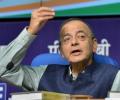
Years before the Supreme Court struck down as 'unconstitutional' an opaque political funding tool that allowed individuals and companies to donate money to political parties anonymously and without any limits, the then finance minister Arun Jaitley -- the prime mover of electoral bonds -- had termed them legitimate and transparent.

Eminent economist and Nobel laureate Amartya Sen on Monday described the electoral bonds scheme as a scandal and welcomed the Supreme Court's recent judgment annulling it.

Collectively, these companies spent Rs 628 crore (Rs 6.28 billion) on political contributions in the past five years, according to their annual reports.

Mumbai accounts for the largest share of electoral bonds sold since inception.
The review pleas filed by advocate Mathews J Nedumpara and others contended that the matter related to the scheme falls in the exclusive domain of legislative and executive policy.

The Karnataka high court on Monday stayed investigation against Union finance minister Nirmala Sitharaman and others over alleged irregularities concerning the now scrapped electoral bond scheme.

The assertion comes in the wake of the Supreme Court directing the SBI to submit the details of the electoral bonds purchased since April 12, 2019 to the EC.

"Remember, the IT Department and the ED implement the Pradhan Mantri Hafta Vasuli Yojana. The State Bank of India implements the #ElectoralBondScam. And at the end of the day, all of these institutions report to the same person: the Finance Minister," Ramesh alleged.

The BJP cited the amendments to the Representation of People Act, 1951 and the relevant portions of the Reserve Bank of India Act and the Income Tax Act for not revealing its donors.
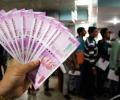
Future Gaming and Hotel Services whose director is the lottery magnate Santiago Martin is the top purchaser of electoral bonds having purchased bonds worth Rs 1,368, according to data uploaded by the Election Commission of India on its website on Thursday.

A five-judge constitution bench headed by Chief Justice D Y Chandrachud held that the 2018 scheme was 'violative' of the constitutional right to freedom of speech and expression and right to information.

'It's not really going to bring about purity in the election process.'
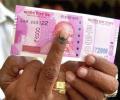
Following is the chronology of events in the case related to validity of the electoral bonds scheme, a mode of funding to political parties, in which a five-judge Constitution bench of the Supreme Court on Thursday delivered a landmark verdict annulling it.

A five-judge Constitution bench headed by Chief Justice D Y Chandrachud, which was hearing an application filed by the Election Commission (EC) seeking a modification of the operative portion of its March 11 order in the electoral bonds case, directed its registrar (judicial) to ensure that the data filed earlier by the poll panel before it in a sealed cover be scanned and digitised.

He said a petition has been filed before the Supreme Court, seeking an independent probe by a special investigation team into the alleged nexus between political parties and companies for corruption through electoral bonds.

When a strong executive decides it wants something, even something that is dangerous and unconstitutional, there is little resistance from within to stop it, notes Aakar Patel.

'The most fundamental flaw with the electoral bond scheme is that it is designed to make anonymous donations.' 'It makes it easy for black money holders as well as corrupt corporates to donate money to the ruling party and ask for a quid pro quo without anybody getting any idea about it.'

It also asked why the data shared pertained to a period from April 2019 even though the scheme for anonymous political funding was introduced in 2017.

The Bharatiya Janata Party on Thursday defended the electoral bonds scheme, struck down as unconstitutional by the Supreme Court, saying it had a laudable objective of bringing transparency in poll funding.
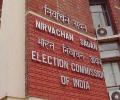
The Election Commission (EC) had, in 2019, flagged its concerns in the Supreme Court on the changes made in several laws relating to political funding to facilitate the electoral bonds scheme, saying it will have 'serious repercussions' on transparency.
The Election Commission on Thursday made public a fresh data set of electoral bonds, including their alpha-numeric numbers that can help match their purchasers with the political parties that received the funds.

Leaders of several opposition parties on Thursday hailed the Supreme Court verdict striking down the electoral bonds scheme and termed it an important step in ensuring transparency in electoral funding.

Kharge also raised the issue of several companies purchasing electoral bonds soon after they faced raids by central agencies such as Enforcement Directorate and Income Tax Department.

The State Bank of India, which unsuccessfully sought extension of time till June 30 to disclose the details of electoral bonds, on Monday faced searching questions from the Supreme Court which wanted to know about the steps taken to comply with the directions it had issued while scrapping the controversial scheme of anonymous political funding on February 15.

Electoral bonds have been pitched as an alternative to cash donations made to political parties as part of efforts to bring transparency in political funding.

About 82 per cent of the total income from unknown sources declared by national political parties in 2022-23 came from electoral bonds, according to a poll rights body.

The ECI data covers 20,421 bonds worth Rs 12,769 crore. The ADR data, however, collated information on 27,811 bonds worth Rs 16,492 crore. The gap is nearly Rs 4,000 crore and involves over 7,000 bonds.

Which entrepreneur would willingly part with her or his hard-earned money for grasping, self-serving politicians? asks Debashis Basu.

;The entire INDIA bloc, led by Rahul Gandhi, was against the bonds and they wanted the old system of cut money to rule over politics once again;

A five-judge constitution bench headed by Chief Justice D Y Chandrachud said there is "no manner of doubt" that the SBI is required to disclose complete details of the bonds.

Government unlikely to bring in an ordinance to address the developments arising out of the Supreme Court order.

The RTI also sought the details of the fees paid by the SBI to senior advocate Harish Salve to defend its case against the disclosure of the electoral bonds' records, citing that the records are held in a fiduciary capacity and the information is personal in nature.
 © 2026 Rediff.com - Advertise with us - Disclaimer - Privacy Policy - Sitemap - Feedback - About us - Terms of use - Grievances